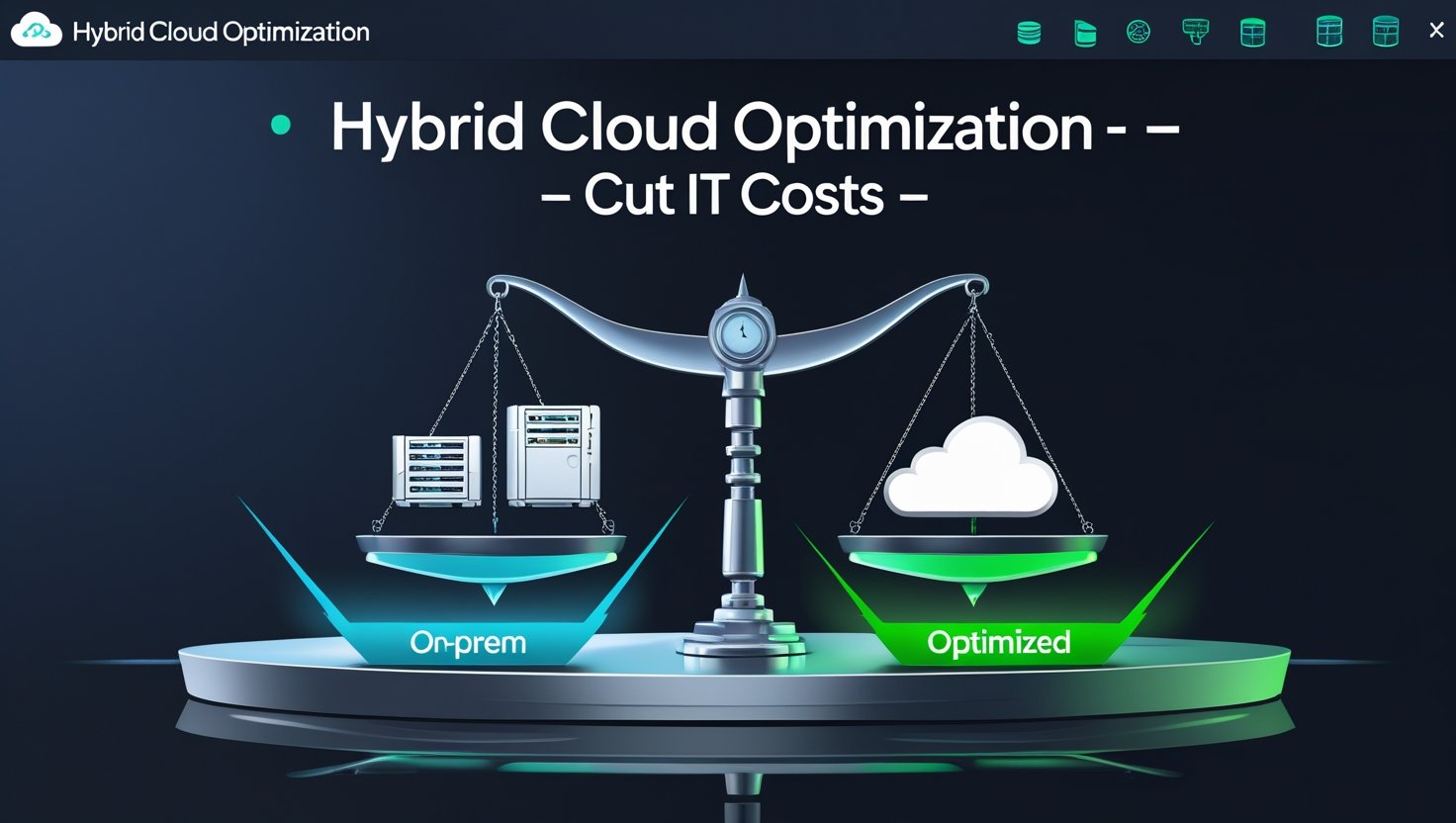
Hybrid Cloud Optimization | Cut IT Costs
Imagine slashing your IT expenses while supercharging your operations, all by using the right mix of cloud resources. Hybrid Cloud Optimization is the secret sauce that helps modern businesses achieve a perfect balance between on-premises reliability and public cloud agility. By strategically blending different environments, companies can cut IT costs and drive operational efficiency simultaneously. This article takes you on an insightful journey through innovative strategies and actionable tips to optimize your hybrid cloud environment. Get ready to reimagine your IT landscape and unlock an invisible engine that powers smarter spending and stronger performance.
Decoding the Hybrid Cloud Landscape:
At its core, a hybrid cloud combines private data centers with public cloud resources to create an adaptive, flexible IT ecosystem. This dynamic arrangement allows organizations to host critical workloads in-house while leveraging the scalability and diverse features offered by external providers. In essence, hybrid cloud is not just about splitting data; it’s a transformation in how IT is managed. Teams can strategically distribute workloads, optimize performance, and address changing business demands without being locked into one provider or platform.
The evolution of cloud strategies has led to an era where resource allocation and service delivery are as much about agility as they are about cost management. With the right hybrid configuration, businesses can avoid expensive over-provisioning while ensuring responsiveness to market shifts. Optimization in this context means continuously refining the blend of on-premises and cloud services for a leaner, more productive IT environment. This not only boosts operational resilience but also paves the way for innovative practices that meet today’s digital challenges head-on.
Moreover, a well-crafted hybrid approach offers the opportunity to integrate security, compliance, and disaster recovery measures seamlessly into the infrastructure. In doing so, businesses enjoy a sophisticated balance of control and flexibility that optimizes both performance and spending. The result? A robust system that evolves with your needs while cutting IT costs and driving overall efficiency.
Financial Foresight:
One of the most compelling reasons to adopt a hybrid strategy is its profound impact on IT budgets. Traditional data centers typically require massive upfront investments and ongoing maintenance expenses. In contrast, a hybrid model offers a pay-as-you-go approach for cloud components, which can significantly reduce capital expenditures. Hybrid Cloud Optimization is all about harnessing these benefits to ensure every dollar spent contributes directly to improved performance and lower operational costs.
By moving workloads to the cloud when it makes financial sense, organizations can avoid the pitfalls of idle hardware or unnecessary capacity. This agile allocation allows businesses to scale resources up or down based on demand, transforming IT spending from a fixed cost to a flexible, operational expense. Consequently, ideas like workload consolidation and resource pooling become more attainable, each step strategically aimed at cutting IT costs.
Furthermore, cost efficiency is bolstered by reducing energy consumption and minimizing the maintenance of physical servers. Automated cost management tools and real-time analytics can help identify inefficiencies and chart the most economical path forward. With smart budgeting and a strategic approach to cloud spending, companies not only improve their bottom line but also gain valuable insights that inform future investments. This financial foresight, paired with robust optimization strategies, ensures that businesses stay ahead in a competitive market where every cent counts.
Streamlining Performance:
Efficiency and speed are the twin pillars of modern IT operations. In the realm of hybrid clouds, streamlined performance is achieved by aligning your optimization strategies with the specific needs of your applications and services. By carefully analyzing workloads and their performance characteristics, IT managers can decide which tasks are best suited for on-premises infrastructure and which can thrive in the elastic nature of the public cloud.
At the heart of this approach lies continuous monitoring and proactive management. Automated performance analytics help pinpoint bottlenecks, while predictive algorithms suggest optimal resource allocation. These smart tactics ensure that your IT infrastructure remains nimble, responsive, and cost-effective. Working in tandem with load balancing techniques, resource scaling, and automated workflows, each component is fine-tuned to deliver the best possible performance without incurring unnecessary costs.
Maintaining efficiency also means establishing clear metrics and performance benchmarks. With these in place, teams can quickly adapt to changes, mitigate risks by addressing critical points in the system, and ensure that every cloud service and on-premises resource contributes effectively to the overall strategy. This practical, data-driven approach not only enhances user experience but also positions your organization for future technological advancements—an essential aspect of any hybrid cloud strategy.
Leveraging Cutting-edge Tools:
The journey toward a finely tuned hybrid environment is supported by a range of state-of-the-art tools and platforms that help manage complexity, automate routine tasks, and monitor performance. Hybrid Cloud Optimization relies on these digital assistants to ensure that your IT workload is continuously balanced between efficiency and cost-effectiveness. From multi-cloud management platforms to container orchestration systems like Kubernetes, these tools provide the infrastructure needed to maintain smooth operations.
Automation tools, for instance, streamline the deployment and scaling of environments while reducing the risk of human error. They can automatically shift workloads based on real-time demand, ensuring you never pay for idle resources. Similarly, performance monitoring solutions offer insights into resource utilization and help identify where further savings can be made. With dashboards that provide real-time data, IT teams can swiftly make informed decisions that ultimately cut IT costs.
Moreover, the integration of artificial intelligence into cloud management platforms is transforming the landscape even further. These intelligent systems learn from historical data to predict trends, optimize resource allocation, and even preempt potential outages before they occur. The result is an ecosystem where every element—from virtual machines to networking services—is tuned to perfection. As you leverage these cutting-edge tools, your hybrid cloud becomes not only more efficient but also a dynamic platform that propels your business forward in a competitive digital economy.
Achieving Seamless Integration:
The true power of Hybrid Cloud Optimization emerges when technology and people operate in unison. Seamless integration of various systems—on-premises resources, public cloud services, and third-party applications – is essential to maintain operational flow and efficiency. This unity is achieved through strong IT governance, clear communication channels, and well-defined workflows that ensure everyone, from developers to operations teams, works together toward a common goal.
Creating such a harmonious environment involves not only deploying the right tools but also fostering a culture that values collaboration and continuous improvement. When systems are interconnected, any deviation in one area is quickly addressed by a collective response, ensuring minimal downtime and optimal performance. This integration minimizes redundancies, prevents configuration drift, and ultimately cuts IT costs by eliminating the inefficiencies that often plague siloed operations.
Furthermore, integration empowers IT leaders to gain comprehensive visibility over the entire infrastructure. This holistic approach plays a crucial role in identifying areas where resources are underutilized or where system redundancies exist. By continuously refining these touchpoints and leveraging APIs and connectors, organizations can create an agile, responsive ecosystem that not only optimizes performance but also paves the way for ongoing innovation. In short, the art of integration is the glue that binds together diverse technologies and teams, transforming them into a seamlessly orchestrated machine built for the future.
Future-Focused:
As we look to the horizon, the future of Hybrid Cloud Optimization is set to be defined by continued innovation and evolving market demands. Emerging technologies such as artificial intelligence, machine learning, and advanced analytics are reshaping how hybrid environments are managed and optimized. These innovations promise to introduce smarter resource allocation, predictive maintenance, and even more precise cost control, ensuring that your IT investments yield consistent, long-term benefits.
Another crucial trend is the growing emphasis on security and compliance. As businesses increasingly rely on a hybrid model, ensuring that sensitive data is managed securely across multiple environments is becoming paramount. Next-generation tools are now being designed with robust security features that seamlessly integrate with overall cloud management strategies. This focus not only safeguards critical information but also minimizes the risk of costly breaches that could derail the gains achieved through optimization.
Additionally, the adoption of serverless architectures and edge computing is opening up new avenues for efficiency. By bringing computational power closer to where it’s needed, these technologies can reduce latency, improve performance, and ultimately cut IT costs by reducing unnecessary data movement and redundant processing. Together, these trends are converging to create a future where hybrid cloud environments are more resilient, responsive, and cost-effective than ever before. Embracing these developments now can position your organization at the forefront of digital transformation, ready to capitalize on every opportunity to streamline operations and drive sustained growth.
Conclusion:
In today’s competitive digital landscape, businesses must continually evolve their IT strategies to stay ahead. Hybrid Cloud Optimization is not just a buzzword but a powerful approach to cut IT costs while elevating performance and scalability. By embracing a blend of on-premises infrastructure and public cloud services, organizations can build agile, resilient systems that drive both innovation and efficiency. As you integrate cutting-edge tools, streamline performance, and foster seamless collaboration, you unlock the potential to transform your IT landscape into a dynamic powerhouse. Remember, the journey to a leaner, more responsive infrastructure begins with a single strategic step towards optimizing your hybrid cloud.
FAQs:
Q1: What is hybrid cloud optimization?
It’s the process of fine-tuning the mix of private and public cloud resources to boost performance and efficiency while lowering costs.
Q2: How does hybrid cloud optimization help cut IT costs?
By enabling pay-as-you-go models, reducing idle capacity, and automating resource allocation, it minimizes unnecessary spending.
Q3: What strategies are commonly used for hybrid cloud optimization?
Techniques like workload balancing, automation, real-time monitoring, and seamless integration are key to optimizing resources.
Q4: Who benefits most from adopting a hybrid cloud strategy?
Organizations of any size—from startups to large enterprises—that seek agility and cost efficiency in IT management benefit from a hybrid approach.
Q5: What are some essential tools in hybrid cloud optimization?
Multi-cloud management platforms, container orchestration tools, and performance monitoring solutions are among the vital resources.
Q6: Besides cost reduction, what are the benefits of hybrid cloud optimization?
It also boosts performance, scalability, security, and overall operational agility, ensuring a robust IT infrastructure.