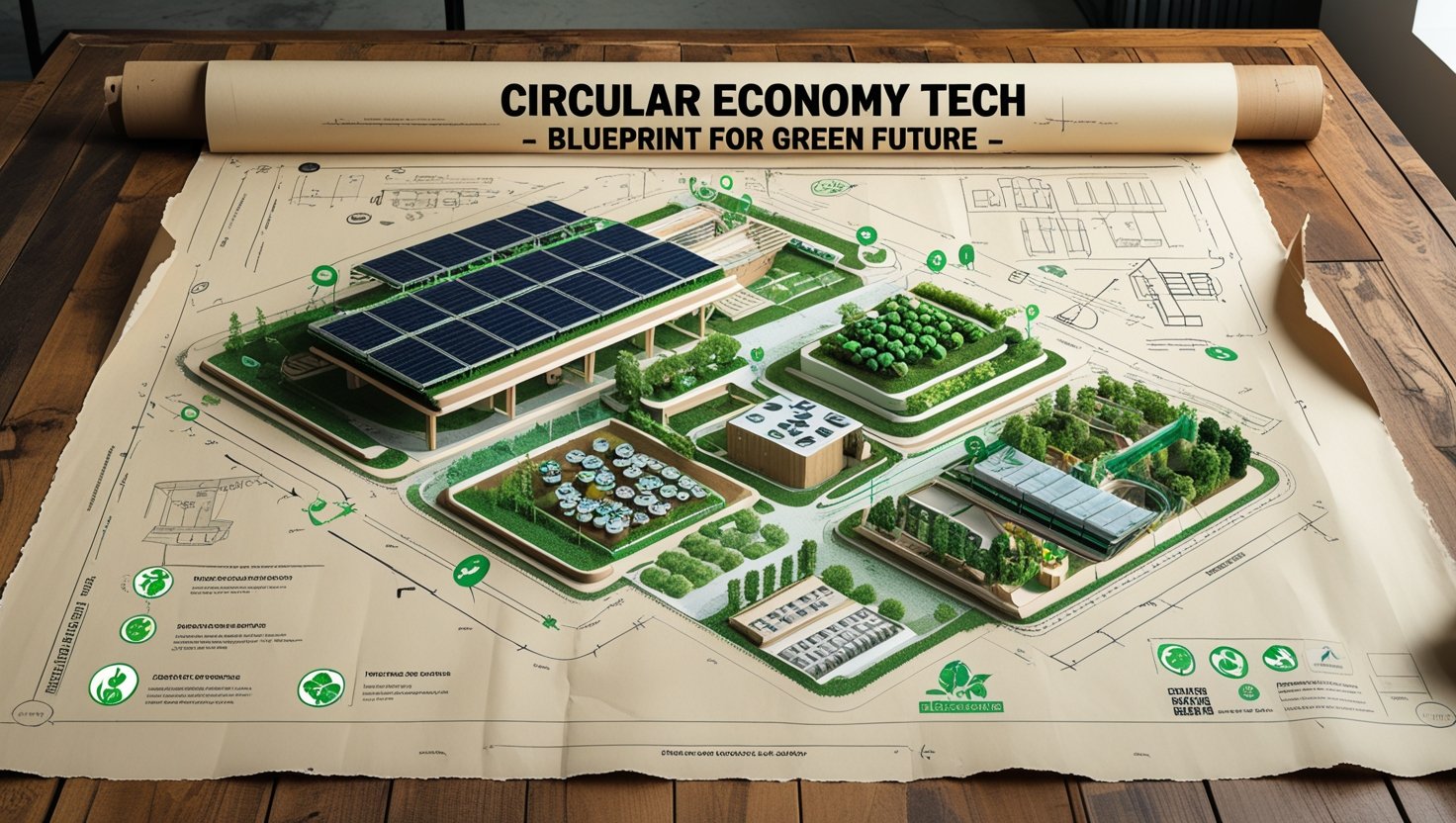
Circular Economy Tech | Blueprint for Green Future
Imagine a world where waste is a relic of the past and every product is reborn, a world where Circular Economy Tech turns disposable into durable and challenges our old ways of consumption. This is not a distant fantasy but a transformative revolution taking shape before our eyes. Our planet is reawakening through innovative tech innovation that reconstructs the journey of every resource, ensuring nothing is truly lost and everything continues to serve. In today’s digital age, emerging technologies are rewriting the rules of production and consumption, giving us a sustainable lifeline to preserve the environment. In this article, we dive into the cutting-edge strategies and breakthrough technologies that are redefining sustainability and propelling us toward a definitive green future. With a fresh perspective and uniquely innovative insights, prepare to explore how each facet of Circular Economy Tech is building an eco-friendly blueprint for tomorrow.
Reimagining Resource Loops:
When we step into the world of Circular Economy Tech, we discover a radical shift in thought: products are no longer destined for the landfill after one use. Instead, they are carefully reintegrated into new cycles. This revolutionary concept challenges the old “take, make, dispose” model by focusing on resource optimization and material regeneration. Companies worldwide are now designing products with their end-of-life in mind, ensuring components can be easily recycled, refurbished, or repurposed.
Advanced tracking systems and digital twins are being deployed to monitor material usage and predict when parts might wear out. This foresight allows efficient scheduling for recycling or remanufacturing. Industries from electronics to automotive are redefining their operational models to embrace these restorative cycles. The integration of sensors and software analytics means that even the smallest details in production can be optimized for minimal waste, giving every material a prolonged, meaningful lifespan. Ultimately, by reimagining resource loops, the circular approach not only conserves natural resources but also offers a resilient economic model built on continuous innovation and reduced dependency on finite resources.
Tech Innovations: Driving Sustainability:
At the heart of modern Circular Economy Tech lies a potent array of digital innovations that bridge the gap between sustainability and economic growth. Technologies such as Artificial Intelligence (AI), Internet of Things (IoT), and blockchain are fueling this global transformation. These tech tools act as the keystones in managing and optimizing supply chains, ensuring that resources are seamlessly tracked, recycled, or repurposed.
For example, AI algorithms can predict product life cycles and manage timely maintenance, reducing premature disposals. Similarly, IoT devices help monitor energy consumption and resource usage in real time, providing data that supports efficient resource allocation and waste minimization. Blockchain, on the other hand, guarantees transparency in the entire lifecycle of a product, from raw material extraction to final customer usage. This traceability builds consumer trust and confirms the authenticity of the recycling process. Embracing these digital tools not only improves operational efficiency but also aligns business practices with a future where every material counts, driving industries towards a green future marked by eco-responsibility and innovative thinking.
Smart Resource Management in the Digital Age:
The digital revolution is reshaping how we manage our resources in unprecedented ways. Circular Economy Tech leverages cutting-edge software to track the flow of products from inception through multiple cycles of use. With cloud-based platforms and big data analytics, companies can gain a granular view of their resource consumption, waste generation, and potential areas of improvement.
Digital dashboards and mobile applications enable managers to oversee logistics, automate recycling processes, and even predict future shortages or surpluses of materials. These smart systems create a feedback loop that continuously refines the efficiency of production cycles. For instance, real-time monitoring of machinery and product usage allows for preventative maintenance, which in turn extends the lifespan of equipment. Additionally, data-driven insights help companies design products that are easier to disassemble and sort at the end of their usage cycle. This comprehensive digital approach ensures that every asset is utilized to its fullest potential, setting a precedent for sustainability and resource efficiency in a rapidly evolving technological landscape.
Innovative Materials and Product Redesign:
Central to the success of the circular economy is the need for innovation right from the product design stage. Circular Economy Tech inspires a complete overhaul of traditional manufacturing processes. Designers and engineers are now encouraged to create inherently sustainable products, products that can be easily upgraded, maintained, or disassembled, ensuring maximum reuse of components.
Emerging materials such as biodegradable polymers, recycled composites, and renewable bioplastics are paving the way for products that not only meet performance standards but also minimize environmental impact. In parallel, modular design principles are taking hold; rather than replacing an entire product due to a single malfunctioning part, consumers can simply swap out the defective component without contributing to waste. This approach extends the lifecycle of products, reduces production costs, and fosters customer loyalty by emphasizing repairability and longevity. By championing innovative materials and smart design, companies can lead the charge in resource optimization and tech innovation, producing tangible benefits for both the environment and the economy.
Collaborative Platforms and Policy Synergies:
No revolution is complete without a cooperative spirit, and Circular Economy Tech is no exception. The journey towards a sustainable green future involves a collaborative tapestry where businesses, governments, and consumers work in tandem. Digital platforms facilitate this collaboration by connecting diverse stakeholders, from manufacturers and recyclers to policymakers and community leaders.
Innovative online communities and collaborative networks are emerging as powerful forums for sharing best practices, technologies, and success stories. These platforms enable real-time collaboration and resource sharing that can quickly scale regional successes to national or even global levels. Policy synergies further bolster these efforts. Governments are increasingly rolling out incentives such as tax breaks, grants, and regulatory frameworks that encourage circular practices. Such policies not only foster innovation but also ensure that industries adopt environmentally friendly methods as a standard operating procedure. With allied efforts in technology, policy, and community engagement, the blueprint for sustainable operations becomes clearer, driving a unified march towards a resilient, eco-centric economy.
Charting a Future with Green Tech:
Looking forward, the vision for a green future is intertwined with advancements in Circular Economy Tech. Emerging innovations in renewable energy, smart manufacturing, and eco-centric design are set to redefine how industries operate over the coming decades. Automation and precision robotics, fueled by AI, are streamlining production processes to reduce waste and enhance precision in recycling and re-manufacturing tasks.
Moreover, the proliferation of distributed energy systems and micro-grid technologies integrates seamlessly with circular principles, ensuring that energy produced is not wasted but is efficiently channeled for sustainable industrial use. Start-ups and research institutions are at the forefront of developing disruptive technologies that blend ecological balance with economic growth. These technological breakthroughs are not just incremental improvements; they are transformative leaps that reimagine every aspect of production, consumption, and disposal. By continually pushing the boundaries of what is possible, Circular Economy Tech is laying down a roadmap for a world that is not only self-sustaining but also innovatively prosperous. This forward-thinking mindset merges environmental urgency with creative problem-solving, crafting a blueprint where every innovation drives us closer to lasting sustainability.
Conclusion:
The transformative power of Circular Economy Tech lies in its ability to overhaul traditional linear models and replace them with regenerative and perpetually adaptive systems. By reimagining resource loops, harnessing cutting-edge digital tools, remaking our approach to product design, fostering collaborative networks, and forging policy synergies, we are crafting an actionable blueprint for a green future. Our planet’s finite resources demand nothing less than innovation and commitment from every sector of society, and the circular economy offers not only solutions but opportunities for growth and resilience.
Our journey through this dynamic landscape reveals that the future of sustainability is not a matter of if, but when. Embracing these innovative technologies paves the way for a world where waste is minimized, resources are optimized, and economic growth goes hand-in-hand with environmental stewardship. The vibrant interplay of technology, design, and collaboration is setting the stage for a renewed world—one where every product, every material, and every effort contributes to a circular legacy of progress.
FAQs:
Q1: What is Circular Economy Tech?
It is an innovative approach that uses technology to keep resources in perpetual use, reducing waste and enabling continuous recycling and repurposing.
Q2: How does Circular Economy Tech contribute to a green future?
By minimizing waste, optimizing resource use, and promoting sustainable practices that lower environmental impact.
Q3: What role does digital innovation play in circular practices?
Digital tools like AI, IoT, and blockchain help track resource usage, optimize production cycles, and foster transparency in recycling processes.
Q4: Can new product designs really reduce waste?
By embracing modular designs and innovative materials, products are engineered for repairability and longevity, significantly reducing waste.
Q5: Why is collaboration important in advancing circular economies?
Collaborative platforms connect stakeholders and align policies, ensuring that businesses and governments work synergistically towards sustainable solutions.
Q6: How can industries transition from a linear to a circular economy?
By integrating smart technologies, redesigning products for longevity, leveraging data analytics, and forming strategic partnerships that drive sustainable innovation.